

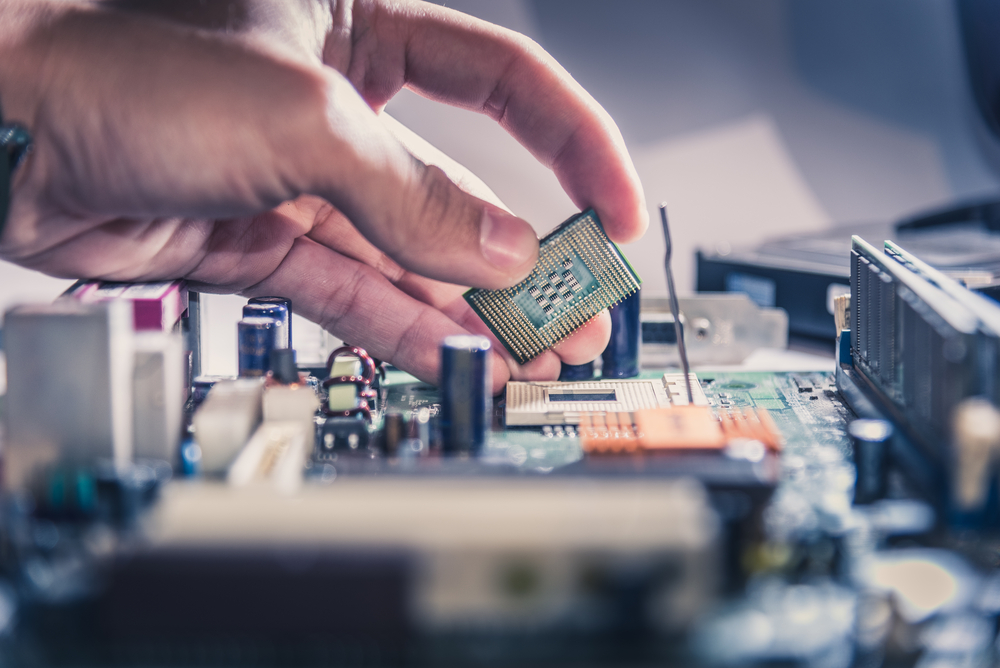
From Prototype to Production: How System on a Chip Speeds Up Time-to-Market
In today’s competitive technology landscape, speed is a critical factor in product success. Companies across industries, from medical devices and aerospace to consumer electronics and industrial automation, are under constant pressure to innovate and bring products to market faster. One technology that is helping organizations accelerate their development cycles is the System-on-Chip (SoC). By integrating multiple system functions into a single ASIC Chip, SoC solutions streamline development, reduce complexity, and shorten the path from prototype to production.
Reducing Complexity Through Integration
Traditional electronic systems often rely on multiple discrete components, including processors, memory, communication interfaces, and power management circuits. While effective, this approach can create challenges during design, testing, and manufacturing. Each component introduces additional connections, potential failure points, and integration requirements.
A System on a Chip addresses these challenges by consolidating many of these functions into a single ASIC Chip. By reducing the number of external components, developers can simplify board designs, minimize hardware complexity, and decrease overall system size. This streamlined architecture enables engineering teams to move through the design phase more efficiently and spend less time troubleshooting integration issues.
The high level of integration provided by an ASIC Chip also contributes to improved reliability and lower power consumption, making SoCs an attractive solution for applications where performance, efficiency, and compact design are essential.
Accelerating Prototype Development
One of the most significant advantages of an SoC-based approach is its ability to speed up prototyping. Because multiple functions are already integrated into the ASIC Chip, developers can create functional prototypes with fewer components and a simpler design process.
Rapid prototyping allows engineering teams to validate concepts earlier in the development cycle. Potential issues can be identified and addressed before entering full-scale production, reducing the likelihood of costly redesigns later. In addition, software development can often begin sooner because the hardware platform is available earlier in the process.
This parallel development approach helps organizations shorten development timelines and bring products closer to commercialization faster than traditional multi-component designs.
Streamlining the Path to Manufacturing
As products transition from prototype to production, manufacturing efficiency becomes increasingly important. Systems built around an ASIC Chip typically require fewer parts, fewer assembly steps, and less complex supply chain management. This simplification can significantly reduce manufacturing risks and improve production scalability.
Fewer components also mean fewer sourcing challenges and lower inventory management requirements. With many critical functions consolidated into a single device, manufacturers can achieve greater consistency and quality control throughout production runs.
Additionally, the reduced board space associated with SoC designs can lower material costs and enable more compact product form factors, creating additional value for both manufacturers and end users.
Driving Faster Innovation
The ability to move quickly from concept to commercialization provides a significant competitive advantage. By integrating key system functions into a single ASIC Chip, System-on-a-Chip technology helps organizations reduce design complexity, accelerate prototyping, and streamline manufacturing.
As product development cycles continue to shrink, companies that leverage SoC solutions can bring innovative products to market faster while maintaining high levels of performance, reliability, and efficiency. For organizations seeking to improve time-to-market and stay ahead of the competition, investing in advanced ASIC Chip technologies can be a powerful strategic decision.
Learn about our work here at Linear MicroSystems by clicking here!
Linear MicroSystems, Inc. is proud to offer its services worldwide as well as the surrounding areas and cities around our Headquarters in Irvine, CA: Mission Viejo, Laguna Niguel, Huntington Beach, Santa Ana, Fountain Valley, Anaheim, Orange County, Fullerton, and Los Angeles.