

ASIC Chip

5 Things You Need to Know About a Time of Flight ASIC

If you’re in the industrial sector, you’ve probably heard of a time of flight ASIC, which is used in a variety of applications. Here, we take a closer look at the definition of time of flight and the five things you need to know about a time of flight ASIC:


First, what is Time of Flight?


Time of flight is the property of a particle, object or another wave. The time-of-flight principle is used in the measurement of the distance between a sensor and an object. This is based on the time difference between a signal’s emission and its return to the sensor after it is reflected by an object. The time of flight principle uses different types of signals, the most common of which are sound and light.


Five Things you need to know about a Time of Flight ASIC


  • A time of flight ASIC is commonly found in a ToF camera, which is a range imaging system that is used to resolve distance based on a known speed of light. It measures the time of flight that a light signal travels between the camera and a subject at each point of the image.


  • Time of flight cameras containing a time of flight ASIC covers ranges starting from a few centimeters up to several kilometers and has lower spatial resolution compared to 2d cameras. These products have been used since 2000 and have since evolved together with the improvement of semiconductor processes. ToF cameras offer up to 160 images per second, which is a lot faster than other 3D capturing images.


  • A time of flight camera consists of an image sensor, which measures the time it takes for light to travel from the illumination unit, the optics that gathers the light and projects it into the image sensor, the illumination unit that provides illumination to the scene, the driver electronics, and the computation or interface.


  • Time of flight circuitry is used for different applications including the areas of 3D imaging and LIDAR. These types of time of flight ASIC typically includes a detecting and driving sensor that is usually in the form of an infrared detector diode. The signal this device release is typically very fast, which also requires high-speed processes.


  • Over the years, several devices were developed for the time of flight cameras. Range gated imagers, for instance, have a built-in shutter that opens and closes the same time as light pulses are sent out. Direct time of flight imagers, on the other hand, are also known as trigger mode where 3D images produced complete both temporal and spatial data.


Looking Forward

There is definitely so much to learn about the world of time of flight ASICs and other types of Application-Specific Integrated Circuits that continue to revolutionize the semiconductor industry.


As more and more technological developments are being made, we can only look forward to better processes that produce excellent results in different industrial applications, especially those that are created to help make production faster and more efficient.


Linear MicroSystems, Inc. is proud to offer its services worldwide as well as the surrounding areas and cities around our Headquarters in Irvine, CA: Mission Viejo, Laguna Niguel, Huntington Beach, Santa Ana, Fountain Valley, Anaheim, Orange County, Fullerton, and Los Angeles.
analog ASIC design and development

Common Pitfalls in Developing and Designing an Analog ASIC

If you are in the business of technology, you’ve probably come across the term analog ASIC at some point. In fact, you may have had one created for your company. But there is so much more to developing an analog ASIC than just putting a chip together that there have been countless failed attempts at developing one. And the problem all boils down to one thing: incompetence. Here are the things that you should look out for when having your analog ASIC developed:


Lack of Proper Industry Knowledge


It’s a cold, hard fact: there are so many companies out there that would easily pretend to know about creating analog ASICs, but in reality, they don’t have a clue. So, many companies have experienced problems with their ASIC and no one seems to know what’s wrong.


Worse, no one knows how to deal with the problem because those who designed the ASIC has relied on an analog cell library from a third party vendor, which means they don’t have any idea about how the system works.


Lack of proper industry knowledge is one of the most common challenges for companies looking to have their analog ASIC developed and the problem may lie from three parties: the cell library designers, the silicon producers, and the IC design company.


This is why it’s very important to check on every detail of a project before implementing it to make sure that everyone on your team really has the expertise that you need.


Lack of Technical Skills


Developing an analog ASIC for your product is crucial because any delay in its production could mean a delay for your launch or worse, failure for your entire project. Creating an ASIC requires a good knowledge of the semiconductor fabrication process and the right computational involvement to make sure that the design is strong.


Going through the fabrication process requires technical skills to ensure that the chip produced will do its job. A lot of designers claim to have the mixed signal design skills needed to complete your product, but that doesn’t guarantee that they actually have what it takes to get your chip right. This is when credibility really counts. Go for companies that already have successful projects in the past and those whose clients can vouch for their quality of service.


Final Words


If you want to have your own analog ASIC developed, make sure to pick up a lesson or two from the horror stories of failed attempts going around the semiconductor industry. Before signing the papers for the services of an analog ASIC design company, do your research first. Don’t settle for the first company you see or the lowest offer given to you.


Instead, make sure that you tick all the boxes in terms of a semiconductor company’s integrity, quality of service and commitment to giving you the best value. Get to know the team leader who will work on your project to know if they are capable of handling the development team and if they have the skills to get things done right and address issues as they come.


Linear MicroSystems, Inc. is proud to offer its services worldwide as well as the surrounding areas and cities around our Headquarters in Irvine, CA: Mission Viejo, Laguna Niguel, Huntington Beach, Santa Ana, Fountain Valley, Anaheim, Orange County, Fullerton, and Los Angeles.
Analog Design

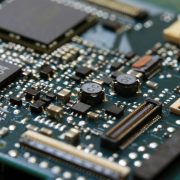
Everything You Need to Know About a System-On-A-Chip

Technology covers a vast spectrum of things, most of which are only familiar to the tech geeks who really dig deep into what every smartphone, computer, and other gadgets are made up of. So, if you’re not one of those who has a strong passion for technology, you might wonder what a system-on-a-chip or SoC is.


Here’s everything you need to know about this all-in-one microchip:


What is a System-On-A-Chip Anyway?


A system-on-a-chip or more commonly known as SoC is an integrated circuit containing a vast number of electronic components designed to function together. In simple terms, an SoC has most necessary electronics to make complex devices or systems. Typically, an SoC has complex computing power, memory, analog or sensing circuitry, power management functions, and interfaces to the outside world.


In fact, you can compare it to a computer that’s fitted into one microchip. This is why your smartphone and tablet can function almost as well as your computer, only much smaller and more compact.


What makes up a System-On-A-Chip?


Like a regular computer, an SoC is made up of different components. It has a Central Processing Unit mostly using ARM technology. It also has a Graphics Processing Unit to let you enjoy those 3D games on your smartphone or tablet. Of course, an SoC should have a memory to enable you to perform different tasks on your device.


Other SoC components could include a cellular radio for 4G LTE connectivity like what you find in Snapdragon S4-powered gadgets, a Northbridge that facilitates communication between the CPU and the rest of the SoC and other circuitry that help power your device.


Where can you find a System-On-A-Chip?


You will find SoCs in a lot of applications these days, most of which are aimed at creating devices that perform various tasks in a compact body. SoCs power smartphones, tablets, digital cameras, wearables, routers and a lot of other products. From the first SoCs that was developed a few years back, the system-on-a-chip that you will find on your phone today is much more complex and somehow smaller than ever!


What are the Benefits of using a System-On-A-Chip?


There are numerous advantages to using an SoC. For one, a system-on-a-chip is integration at its best. Companies that create devices small enough to fit in your hand know how important integration is in powering them, and that’s where SoCs come in.


An SoC is also very small and compact, which means that it doesn’t require much power and can fit perfectly inside an electronic device while leaving space for batteries and other components.


And since SoCs are a lot smaller, their manufacturing costs are also a lot lower, but they will not disappoint when it comes to functionality and power. They are, of course, more efficient when compared to their traditional counterparts.


There is still so much to learn about systems on chips and how they help power the devices that we’ve come to love today. Contact Linear MicroSystems today for a free SoC consultation!


Linear MicroSystems, Inc. is proud to offer its services worldwide as well as the surrounding areas and cities around our Headquarters in Irvine, CA: Mission Viejo, Laguna Niguel, Huntington Beach, Santa Ana, Fountain Valley, Anaheim, Orange County, Fullerton, and Los Angeles.