
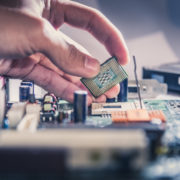
asic card

How Mixed Signal ASIC Can Be Used in Machine-Learning Algorithms

A study was able to determine how mixed signal ASIC was able to accelerate diverse machine-learning (ML) algorithms.

Knowing machine-learning algorithms


Basically, machine-learning algorithms process huge datasets rapidly, giving helpful insights to a particular outcome. Nowadays, there are many emerging applications that has increasing dependencies on the ability to extract patterns from huge data sets in support to inference and decision-making with ML algorithms.


Thousands of data sources are analyzed simultaneously using machine learning algorithms. This makes it impossible for human traders to achieve. That is because machine learning algorithms can help them squeeze a slim advantage over the market average.


ML algorithms offer higher performance in comparison to humans particularly in cognitive and decision-making tasks. However, more computing capability is needed due to the complex computation in processing larger amounts of data.

Meeting challenging demands


The challenges in meeting the computational demands of general purpose processors, the use of specialized processors has been applied. As a result, such ML accelerators will be able to deliver orders of magnitude higher energy efficiency more than general purpose processors can provide.


However, the use of analog or mixed signal accelerators can be useful for improving the energy efficiency of machine learning accelerators. Comparing these to traditional large-signal computations in the digital domain, these are much more energy-efficient.


But still, such accelerators lack the programmable architecture, compiler support, or instruction sets to support architecture software. These are important in supporting high-level programming languages like Julia or Python.


In addition, there are tradeoffs in energy versus accuracy due to the algorithmic error tolerance in allowing hardware-level small-signal computations. with this case, there must be a control at the application level to meet the application domain accuracy or precision goals.


In such a case, there is a need for careful hardware, instruction set architecture, and compiler design.

Designing programmable mixed-signal accelerators


The use of programmable mixed signal accelerator can address the challenges in the previous applications. This can help diverse ML algorithms to accomplish a high level of programmability without affecting mixed-signal accelerator efficiency for specific machine-learning algorithms.


Basically, mixed signal ASIC uses both analog and digital circuits on a single semiconductor die. This is most common in smart mobile phones as mixed signal designs are everywhere.


Advantages of using mixed signal ASIC


  • Exposes instruction set mechanisms to allow software to control over the said tradeoffs in energy vs. accuracy
  • Supports the compilation of high-level languages
  • Offers an alternative line of integration through the use of computer memory
  • Energy benefits through optimal swing values gained through compiler directed energy optimization


Conclusion


Overall, the utilization of the first end-to-end design of mixed signal ASIC will accomplish high-level programmability. This aims to do it without compromising the efficiency of mixed signal accelerators for particular machine learning algorithms.


The development of a new technology has enabled software control over tradeoffs in energy versus accuracy. It also supports the compilation of high-level languages down to the hardware. Thus, it has better energy efficiency compared to digital ASICs even with much greater programmability.


This also shows significant energy savings resulting from tolerable small programmer-specified errors.


Need a proposal? Click here to get in contact with one of our specialists!


Linear MicroSystems, Inc. is proud to offer its services worldwide as well as the surrounding areas and cities around our Headquarters in Irvine, CA: Mission Viejo, Laguna Niguel, Huntington Beach, Santa Ana, Fountain Valley, Anaheim, Orange County, Fullerton, and Los Angeles.
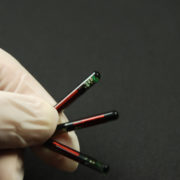

System-on-a-Chip

Linear MicroSystems in the Medical World: What ASICs Do for Hearing Aids

Advancement is the medical world can be credited to modern technology, such as the development and integration of linear microsystems. One of the notable microsystems technologies currently is the application-specific integrated circuits (ASICs).


Definition of microsystems


In short microsystem is defined as the collection of electronic and electromechanical elements that are reduced in size using advanced machining and lithographic techniques.


Therefore, the use of microsystem architecture in many medical devices will help improve the health and well-being of millions of people around the world.


These microsystems are developed for devices for short and long periods of time, particularly in diagnostic and therapeutic applications. Additionally, these are used in devices with limited contact with the patient and in permanently implantable devices.


Analog ASICs in medical applications


A lot of reasons sit behind the use of analog ASICs in the medical field. As a matter of fact, the use of analog ASICs can simplify sensor conditioning and calibration due to the flexibility of its form factor.


For example, the medical device industry uses ASICs technology to develop devices like glucose meters, hearing aids, and pacemakers.


Among the technologies used in the medical field are the following devices:


  • Deep brain stimulator
  • ECD readout
  • Hearing aid power management
  • Lab-on-chip interface
  • Li-ion battery charger
  • Nerve stimulation integrated circuit
  • Power management chip
  • Ultrasonic TX/RX
  • Wireless power/data transfer
  • X-ray imaging chipset


Development of ASIC applications


Hearing aid (audio tapered pot)


To sum up, this custom ASIC device will provide 4 audio tapered trim pots for the adjustment gain and filter response of hearing aids.


Each pot has a setting stored in EEPROM and accessed through a 2-wire serial interface. In addition, unique low-voltage analog switches give a rail-to-rail input range at supply voltages of just 1.1v.


Device features


  • Ultralow supply current of lesser than 1uA
  • Low minimum supply voltage of 1.1v
  • Audio tapered trim pots
  • Resolution = 7 or 8 bits
  • 2-wire serial interface
  • Temperature range = 0 to +70 degrees Centigrade
  • 4 independent channels
  • Internal 30 Bit EEPROM


Hearing aid


This is an advance custom ASIC hearing aid that provides audio amplification and frequency response correction when mated with input and output transducers. Trim and configuration data stores in an internal EEPROM.


Moreover, it operates in a low supply current and voltage.


Device features


  • Low active current
  • Low minimum supply voltage of 1.5v
  • Adjustable frequency response
  • Adjustable gain
  • Serial interface
  • Internal EEPROM
  • Temperature range = 0 to +70 degrees Centigrade


ASICs in hearing aids


Microsystems are particularly useful in developing power management ASIC for battery powered implanted hearing aids. The technology in ASIC will convert the power of both single and stacked ZnO2 or Li-ion batteries to turn on the audio capture chain.


This includes the ADC, a class D audio driver chain, as well as the digital audio processing. These will manage the inductive communication between the implant and the hearing aid.

In conclusion, if you find yourself interested in what other areas we work in here at Linear MicroSystems, click here!


Linear MicroSystems, Inc. is proud to offer its services worldwide as well as the surrounding areas and cities around our Headquarters in Irvine, CA: Mission Viejo, Laguna Niguel, Huntington Beach, Santa Ana, Fountain Valley, Anaheim, Orange County, Fullerton, and Los Angeles.

system-on-a-chip

The SoC Inside Your Smartphone: System-On-A-chip

Are you familiar with system-on-a-chip (SoC)? If not, well, you should because it is one of the components found inside your beloved smartphone.


In fact, it is an especially important component of your smartphone that makes it function, comparable to a human brain. But perhaps it is more appropriate to compare it to the motherboard of a personal computer (PC).


The system-on-a-chip in brief


Motherboard on a PC are composed of a central processing unit (CPU), graphical processing unit (GPU), and a random-access memory (RAM). While these components reside as separate units on a PC, the system-on-a-chip on a smartphone combines all components into a single integrated circuit.


During the consolidation of parts, software components and hardware components will be combined. The combination of hardware and software components allows the reduction of power consumption and increases its performance overall.


To keep different elements in a confined area


It should be a daunting task to imagine all the different elements to coexist in a single confined area. Therefore, manufacturers take advantage of the ARM architecture in which its processors use the RISC-based design.


RISC stands for reduced instruction set computer, while ARM stands for advanced RISC machines. The ARM technology runs using a limited instruction set smaller processors can handle. On the other hand, larger computers use processors utilize processors designed to handle complex sets of instructions.


The ARM processor can complete many simple tasks at a higher frequency with less energy. This is because of the reduction of complexity of instructions that the processor needs to handle.


As a result, it can increase the efficiency of the processor as it eliminates the unnecessary instructions and parts, such as transistors, to allow the creation of a simple circuit.


The future of system-on-a-chip


The evolution and expansion of SoC technology with the proliferation and popularity of smartphones and other mobile devices are not limited only to consumer electronics. SoC is applicable in fields of specialty, such as the medical industry.


In fact, there is speculation that SoCs can be useful in implants for the deaf and blind, as it gives them the ability to hear and see. In addition, it can be applicable to microscopic robots that can prevent the entry of harmful diseases into the human body. That said, this can be just the beginning of a potentially revolutionary technology.


Conclusion


Although the system-on-a-chip is small and simple in comparison to the hardware and software found in most modern laptops and PCs, it is equally complex and intricate. But consumers can care less about its intricacy, knowing about its contribution to the development of modern technology.


The future of SoC technology is promising, aiming to make the life of smartphone users more convenient and productive. Perhaps it is about time consumers learn to appreciate how SoC technology can pave the way for the future.


Have a new project coming up regarding system-on-a-chip? Click here for a proposal!


Linear MicroSystems, Inc. is proud to offer its services worldwide as well as the surrounding areas and cities around our Headquarters in Irvine, CA: Mission Viejo, Laguna Niguel, Huntington Beach, Santa Ana, Fountain Valley, Anaheim, Orange County, Fullerton, and Los Angeles.
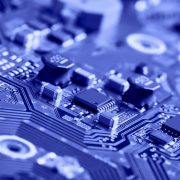
system on a chip

ASIC Chip in The World Of AI: An Overview

Artificial intelligence (AI) technologies have a basic need for application specific integrated circuit (ASIC) chips. The ASIC chip allows programming of instructions to operate as an accelerator for simultaneous algorithms.


An ASIC chip basically enables multiple AI algorithms to operate simultaneously without compromise to its computing power. This makes it more advantageous than other technologies, which will likely be the future of AI training and development.


Development of AI technology


Basically, there are several silicon options for training and development of AI technology aside from ASICs. Such would include central processing units (CPUs), field programmable gate arrays (FPGAs), and graphical processing units (GPUs).


The use of CPUs offers a great level of programmability, but they tend to give less power in terms of performance compared to dedicated and optimized hardware chips.


FPGAs, however, are so flexible and they have great performance, ideal for specialized applications that require a small volume of reprogrammable microchips.


FPGAs, on the other hand, are expensive and very hard to make.  In fact, in comparison to ASICs and GPUs, they still can falter in terms of performance and power. That said, GPUs are ideal for graphics, scientific algorithms, and underlying matrix operations.


Ideally, ASICs is the best option to accomplish a very specific task at high efficiency, performance, and power as it is a customizable chip.


Role of ASIC Chips for AI


  • ASIC chips are microchips that are created for a particular application
  • Their logic can be programmed to test an AI model without dedicating its resources or affecting any other task
  • They have faster computing power in comparison to regular CPUs, FPGAs, and GPUs


Technologies using ASIC Chips


Since ASICs support AI and similar algorithms, here are examples of technologies able to benefit from it:


  • Tensor processing units (TPUs) of Google, a series of ASICs created for machine learning
  • Deep learning unit from Fujitsu
  • Intel to release AI ASICs in the near future


ASIC chips perform specific computer operations and run a narrow and specific AI algorithm function. Since chips carry the workload in parallelism, AI algorithms accelerate faster using an ASIC chip.


Need a proposal for your ASIC chip project? Click here!


Linear MicroSystems, Inc. is proud to offer its services worldwide as well as the surrounding areas and cities around our Headquarters in Irvine, CA: Mission Viejo, Laguna Niguel, Huntington Beach, Santa Ana, Fountain Valley, Anaheim, Orange County, Fullerton, and Los Angeles.
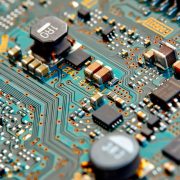
microsystem

All about Time of Flight ASIC and Its Future

beingTime of Flight is the measurement of travel time by an object, electromagnetic, or acoustic wave through a medium. From radiation detectors to automotive, the Time of Flight ASIC has come a long way.

Time of Flight ASIC in the Medical Field

The medical field has reaped the benefits of TOF techniques; medical PET or Positron Emission Tomography for medical imaging, using time of light to improve background ratio and spatial resolution.

Time of Flight measurement in PET scanners provide accurate image reconstruction at a lower radiation dose and eliminates the risk of diagnostic error.

Time of Flight ASIC in Modern Day

Today, the use of the Time of Flight technique in Positron Emission Tomography (PET) is improving diagnostic and therapy assessment processes for patients in different medical fields.

Over the years several studies have been conducted on the use of Time of Flight ASIC technique and the development of high-resolution PET detectors with high accuracy and timing capabilities. Various ASIC designers and manufacturers have incorporated this method to improve imaging results.

Risk of missed diagnoses and cancer detections are lowering. This is also reducing the required time for data acquisition and the doses of radiation employed. Lower radiation dose equals lower cost.

The advancement of technology and recent ASIC designs allow higher accuracy while streamlining processes at lower costs. Designers and manufacturers have developed the design and production of a range of ASIC solutions used in clinical and medical evaluation.

Bettering performance in this area causes lower radiation doses being exposed to patients, and lowers costs.

Where do I find Time of Flight ASICs?

If you need ASICS, Linear Microsystems develops and manufactures high performance ASICs for your unique applications. The company’s over 20 years of experience gives them the knowledge and design expertise to come up with an advanced design automation toolset, packaging options, advanced processes, and the capability to conduct production testing while maintaining a high level of quality.

With the advanced tools, design system, and expertise, Linear Microsystem produces full SOC and mixed-signal ASICs.

Linear Microsystem is your one stop shop for all your ASIC needs. With a strong design team and the right experience levels, no design is too complex.

In-depth knowledge on various technologies and applications, tells you you will receive the perfect solution at a fair cost. Besides, you can get a free quote at any time by clicking here.

With the option to participate in the design, you get real time updates on how the project is progressing.

Linear Microsystem offers full service – where we perform all development activities from order, tests, and delivery.


Linear MicroSystems, Inc. is proud to offer its services worldwide as well as the surrounding areas and cities around our Headquarters in Irvine, CA: Mission Viejo, Laguna Niguel, Huntington Beach, Santa Ana, Fountain Valley, Anaheim, Orange County, Fullerton, and Los Angeles.
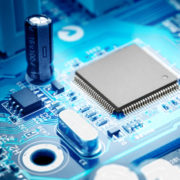
Mixed Signal ASIC

LiDAR ASIC and its Environmental Applications

LiDAR or Light Detection and Ranging technique uses light for remote sensing of the outdoors. Also referred to as laser radar, LiDAR ASIC is now used as an environment sensing technique, tracking changes in the environment in locations that are hard to navigate by foot or too large to be self measured .

LiDAR can be used in different environmental conditions, including in the dark and cloudy areas. Although LiDAR technology was first developed in the 1990s, environmental uses have only been available since 2005.

With LiDAR’s many uses, its ability to track changes can save thousands if not millions of lives during natural disasters.

Topographic LiDAR examines and maps land through near-infrared lasers while bathymetric LiDAR measures seafloor and riverbed elevations using water-penetrating green light.

Common uses of LiDAR

Forestry

  • LiDAR technology helps with forest mapping, inventory, research, treatment, and restoration. Detailed Surface Modeling(DSM’s) digital elevation products work with forest planning and management.
  • LiDAR technique is a proven method to study and monitor forest fire patterns. This allows fire departments to guestimate the next forest fire.
  • This technology helps better understand forest structure and density, leading to more accurate forest inventory.
  • LiDAR gives accurate information for land as well as ecological classification.

Sea

  • LiDAR ASIC measures coastline topography; above and below the water surface as deep as 3 times the visible depth.
  • The Light and Detection Ranging technology helps with map creation, the monitoring of sediment erosion, deposition, and dredge disposal.
  • LiDAR also measures beach storm response.
  • This approach proves effective in providing accurate data for safe marine navigation, seafloor mapping, shoreline mapping, and shallow water mapping.

Disaster Awareness and Preparedness

  • LiDAR can help residents in hurricane prone areas to determine if residential structures have enough elevation to withstand storms. It helps predict how a disaster may affect an area.
  • It used in climate monitoring.

Pollution

  • LiDAR ASIC measures particles in the atmosphere. Some studies even use this technology to measure pollutants in the air.

LiDAR is useful for many environmental applications including agriculture, mining, and river surveys. LiDAR systems allow mapping professionals, and scientists in the ecological field to examine the environment thoroughly and accurately.

Its high resolution is making it easier for environmental scientists to gather data precisely, accurately, and with high efficiency.

LiDAR ASIC technology minimizes the impact of natural disasters, streamline data acquisition, and preserve the environment and saves resources.

Most of all, LiDAR saves lives by spreading awareness of the severity of natural disasters.

Click here to learn more about our technology here at Linear MicroSystems.


Linear MicroSystems, Inc. is proud to offer its services worldwide as well as the surrounding areas and cities around our Headquarters in Irvine, CA: Mission Viejo, Laguna Niguel, Huntington Beach, Santa Ana, Fountain Valley, Anaheim, Orange County, Fullerton, and Los Angeles.
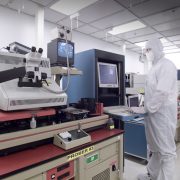
ASIC Card

ASIC: Diving into Industrial Applications

ASIC technology allows for the integration of required functionality to pave way for next generation designs. It also allows full customization of the design according to usage and specification. Besides that, Application Specific Integrated Circuits are lower power, high reliability, and difficult to copy.

ASICs are designed to carry out a specific task for a specific application. Since its development, many industries now depend on ASICs.

Common ASIC Industrial Applications

  • Manufacturing and process automation
  • Human/machine interface
  • Sensor interface
  • Home automation
  • Building automation
  • POS and Terminals like touchscreen, barcode scanners, and magstripe
  • Power monitors
  • Gas sensors
  • Power sensors
  • Precision timers
  • Ultrasonic sensor drivers
  • LED drivers
  • Vibration and motor sensors
  • Movement sensors
  • Speed and position sensors
  • Chemical sensors
  • Tags and RFIDs
  • GaN and laser drivers
  • And so much more

https://linearmicrosystems.com/ develops and manufactures ASICS for various industrial applications. And with over 20 years of experience in the business, the team offers provides solutions to all your ASIC needs.

Reasons why use an ASIC

  • Autonomy with lower internal components, less or lower power consumption, and better power management control.
  • Your device is fully protected from cyber-attacks that will compromise safety and data security. With an ASIC designed specifically for your application, the solution is also designed with firmware and security boot, authentication, and attack protection.
  • Using ASIC means optimization of performance according to your specifications. Besides, it is designed for specific regulatory compliance. https://linearmicrosystems.com/ adds functionalities that meet your ASIC needs.
  • ASIC reduces product weight and size.

For all your ASIC application needs, https://linearmicrosystems.com/ offers a multitude of ASIC designs and applications:

  • Communications like transceivers, telecommunications, WIFI, optical
  • Video such as laser drivers and laser micro projection
  • Audio like amplifiers and signal processing
  • Automotive such as linear position sensors and hall rotary sensor
  • Sensors include touchscreen processing, temperature, infrared, moisture, pressure, magnetic, and inductive proximity
  • MEMS include drivers and controllers
  • Power Management for power supply, low power, high voltage, and more
  • Medical ASICS design and application include ultrasound, pain management, and glucose monitoring
  • Display designs include LED, LCD, and OLED
  • Signal Processing and Control include digital and analog filters, synchronous detection, frequency synthesis, and more
  • Military design and application like Mems Avionics and 1553 bus transceiver and protocol,
  • Industrial Control
  • Motor
  • ATE ASICS for power management, data acquisition, and PIN driver.

For all your simple to complex ASIC needs, https://linearmicrosystems.com/ will make the task easier for you. You can submit your ASIC specifications and we will give you a quotation at no cost.

After clicking here, whether you will perform the design or participate in the design process, Linear will make it possible for your business.


Linear MicroSystems, Inc. is proud to offer its services worldwide as well as the surrounding areas and cities around our Headquarters in Irvine, CA: Mission Viejo, Laguna Niguel, Huntington Beach, Santa Ana, Fountain Valley, Anaheim, Orange County, Fullerton, and Los Angeles.
analog design

Process Node Considerations in The Development Of High-Performance Data Converters

Moving between analog design and digital domains require data converters, but sometimes they present both challenges and opportunities.


When it comes to sensors and actuators, the use of data converters is necessary. Moreover, they are used in many other places, including RF signals for wireless communications, on-chip from PVT monitors, embedded in the SerDes for wireline communications, and those in voltage domains.


Challenges for Data Converters


There are increasing challenges in the arrival of newer technologies. However, emerging applications, including autonomous driving array of sensors, may require reconsidering some established practices.


At the same time, data converters and analog ASIC can be considered in artificial intelligence instead of the power-hungry digital multiply/ accumulate functions.

How Data Converters are Designed


Data converters are designed and built for very exacting demands just like other basic components. So, the amount of accuracy needed for the power you can tolerate will determine what your system is capable of.


However, the biggest challenge for analog to digital converters used in wireless communication is when you need to get an analog signal into the transceiver. Such has been considered one of the challenges for 5G or the ecosystem around the automotive industry.


Smaller Technology Nodes


Analog to digital converters can be found all around the world. But the industry is seeing a push for higher performance, lower power solutions. This needs to be implemented in smaller technology nodes.


Take note that smaller technology nodes can cater to digital blocks to make it work faster while keeping or increasing their performance.

Pushing the Technology Limit


A lot of analog design are still adapted by many designers. But the decreasing size of the process nodes can pose a problem for analog designers.


However, there are converter technologies to address this issue, since analog designers are creative. This can be remedied using a digital-assisted calibration.


So, it requires a low-performance analog block design instead of trying to push analog performance beyond the technological limits. As a result, it can improve the efficiency and allow the reuse of old architectures previously limited to low-performance applications.


Such process nodes will enable lots of digital processing in a small area. However, it will require to run more simulations.


Pushing the Speed Limit


Getting data on and off chip is the function of many analog contents. This can be done via PCI express PHY with a decision feedback equalizer and auto-calibration. But they can be fast enough that it will get difficult to move the data from one location through the medium.


This can be through the FR4, absorbing the signal at high frequency, which is much faster than low-frequency signals.

Conclusion


Data converter technology is evolving rapidly. Since the demands are changing quite rapidly, the use of newer process nodes has added complications. So, any increase in the accuracy obtainable can be used to improve the overall chip performance and power profiles.


Therefore, to obtain the accuracy levels, calibration is essential. Nowadays, automotive analog design is pushing these circuits to undergo self-test, which is something to look forward to.

Looking to get in contact? Click here to be redirected right to our contact page!


Linear MicroSystems, Inc. is proud to offer its services worldwide as well as the surrounding areas and cities around our Headquarters in Irvine, CA: Mission Viejo, Laguna Niguel, Huntington Beach, Santa Ana, Fountain Valley, Anaheim, Orange County, Fullerton, and Los Angeles.
System-on-a-chip

Challenges of Integrating Microprocessors and Memory in A System On a Chip (SOC)

Technological experts nowadays are relying more on integration, particularly in the field of microprocessors. However, there are challenges faced by engineers as it becomes harder to integrate system on a chip or SOC with the increasing amount of IP.


SOC integration has now been challenged with increased complexity such as multiple processors, power domains, and I/O. Here are several challenges that experts consider to be affecting technological advancement in different levels.


Problem with Complexity


Generally, people are not getting what they have expected. Expectations let them think that it is going to do something, but it does something else.


Another thing is complexity. Considerably, IP blocks are complicated, as well as the designs with such a short timeframe.


Timeframes Getting Too Short


Since integrators are under time pressure, it becomes quite challenging for integrators to do everything they can to achieve the highest quality in short period of time they have. At 15,000 CPUs running 24/7 for the verification process, it is a tough challenge.


Compatibility and Quality


Quality has a subjective and objective component. As far as the subjective component is concerned, nobody tends to get it right because it entirely depends on the user. On the objective component, however, it is what IP vendors are working to get right.


During the development of the system on a chip, sometimes the IP is being developed by other sources. Consequently, there will be more unknowns, while the other piece of verification is viewed at the IP level.


When it comes to verification in terms of use cases, there will probably be a million of them. Therefore, integrating the IP of company A and company B will be confusing since there is no assurance if that stuff works together.


Moreover, it will be difficult to ensure that the specs are interpreted in the same way.


Challenges of Sharing System On a Chip Memory


The same issue about SOC designs in 1958 was addressed in recent years. This was the need for larger memories to cater to increasingly powerful SOC designs. But sharing memory presented several challenges.


  • Shared memory physical interconnection
  • Concurrent multiprocessor shared memory access
  • Service-level guarantees
  • System performance


Consequently, a design methodology has been developed to utilize the elements that will be able to address such challenges.


  • Open-core protocol
  • Sonics Graphical SOC design, test, and modeling tools
  • MemMax memory access scheduler
  • SiliconBackplane MicroNetwork


Such elements will provide designers with essential architectural features and shared memory operational visibility to achieve optimized system performance. The main architectural methodology has adopted the Local Area Network concepts that offer high-performance communication between heterogeneous entities using a translucent shared transport mechanism.


Conclusion


Solving the challenges of SOC shared memory might not be enough to cater to the needs of integrating microprocessors and memory on a system on a chip. Basically, it is just a design methodology that employs atomic split-transaction operations to support multiprocessing and exploit multi-threaded MicroNetwork interconnections and opportunistic external memory access optimizations.


Therefore, solving the shared memory challenges of SOC is just an outcome of methodology philosophy. Perhaps technological experts of today can take advantage of this opportunity that was used to solve the interconnections problem in 1958, using the SOC designs of today.

Still interested in learning about system on a chip? Click here and head on over to our case study that features all things SOC.


Linear MicroSystems, Inc. is proud to offer its services worldwide as well as the surrounding areas and cities around our Headquarters in Irvine, CA: Mission Viejo, Laguna Niguel, Huntington Beach, Santa Ana, Fountain Valley, Anaheim, Orange County, Fullerton, and Los Angeles.
RF ASIC

Linear MicroSystems: When to Consider Outsourcing Engineering

At Linear MicroSystems we know that the success of business nowadays is more focused on its technical capabilities. So, it is vital to have a great deal of expertise in translating engineering and technology projects from business requirements to avoid wasting time and money in the process.


One notable strategy that most businesses do in order to make investments more beneficial is to consider an outsourced team. That is because it can offer more avenues of engineering styles and capabilities compared to having just a single engineer onsite all the time for roughly the same price.


What Is Outsourcing?


Outsourcing happens when a business employs an outside entity to provide goods or services, instead of relying on its internal support. While outsourcing generally focuses on the reduction of costs for big businesses, others outsource engineers to bag in an extra set of skills.


In this sense, engineering is outsourced based on the vision that businesses can take advantage of the many benefits it can provide, which include the following.


  • Increased technical capabilities
  • Increased technical support
  • Reduced operating cost
  • More focus on the core business drivers


Although it may not always be overseas, outsourcing needs to have a team that can provide results, be a partner that understands your business needs, and be cost effective.


Linear MicroSystems can manage the needs by introducing a number of advantages when engaged in engineering outsourcing.


  • Latest technology
  • Reduce overhead cost
  • Comprehensive engineering services
  • On-demand services
  • Faster turnaround time
  • Focus on core business drivers


Why Outsource Engineering Process?


Apart from cost reduction, companies need to outsource engineering in order to access skills and expertise not readily available within them.


But it is also important to understand that engineering outsourcing requires the company to trust the team they have chosen. This means that you must trust their abilities, expertise, and interest and involvement in the project.


And because you may not be familiar with outsourcing, it is not possible to make the best decisions for the business. So, it is vital to understand how to mitigate and avoid any risks by becoming acquainted with outsourcing in general.


Thus, it can help your business if there is a productive collaboration with a remote team, particularly relying on a third-party engineering firm as Linear MicroSystems.


How To Outsource Engineering Services


There are many ways to outsource engineering services that can help you in your endeavor.


Freelancer Platforms


If you are on a tight budget but looking to get something done in a shorter period, several freelance websites can help you out without breaking a sweat.


Project Outsourcing


This means that you must hand over the whole project to an outside firm. Take note that this can be a hands-off approach that can of course be modified depending on the needs of your company.


Many other options are being used, including staff augmentation. This may mean that the company can add one or more staff members to your team on a per contract basis.


Still have some questions on outsourcing or looking to get in contact with one of our representatives? Click here to get in contact with us today!


Linear MicroSystems, Inc. is proud to offer its services worldwide as well as the surrounding areas and cities around our Headquarters in Irvine, CA: Mission Viejo, Laguna Niguel, Huntington Beach, Santa Ana, Fountain Valley, Anaheim, Orange County, Fullerton, and Los Angeles.